
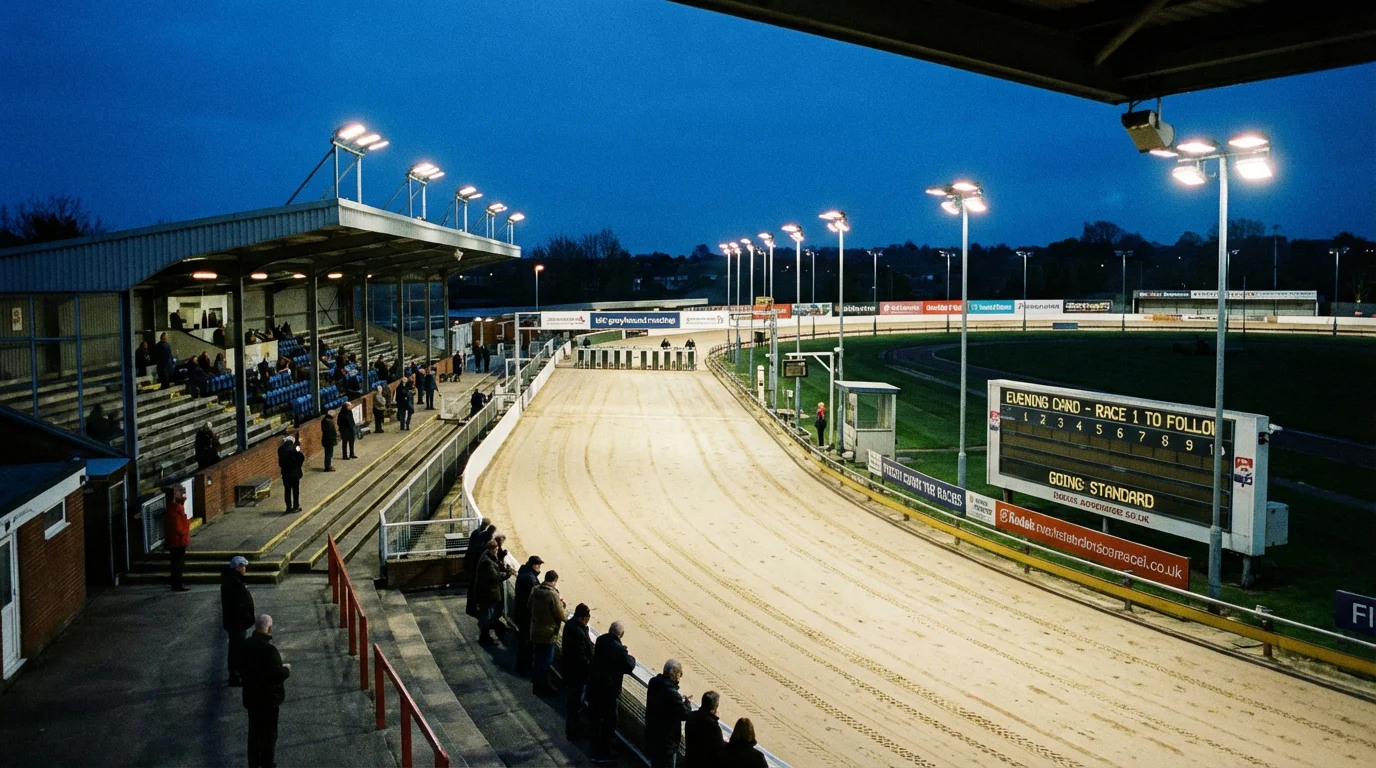
UK greyhound racing runs almost every day of the year, across roughly eighteen GBGB-licensed tracks, with cards scheduled from mid-afternoon through late evening. On a typical weekday, more than a hundred individual races take place. For bettors, this volume is both an opportunity and a trap — opportunity because there is always a race to analyse, and a trap because the sheer frequency invites undisciplined, high-volume betting with inadequate preparation. Understanding the schedule is not just about knowing when races happen. It is about knowing which meetings are worth your attention and how the weekly rhythm of UK greyhound racing affects form, recovery, and the quality of the data you are working with. Stay updated at dogracingresultstoday.
The schedule also determines the type of racing on offer. Evening meetings at major tracks feature graded racing with deeper form profiles and more competitive markets. Afternoon meetings — primarily the BAGS service — exist largely as a product for betting shops and online operators, with shorter form histories and thinner exchange markets. Knowing the difference matters for selection quality and for the reliability of the odds you are taking.
UK Greyhound Track Race Nights: Which Tracks Run Which Days
Each GBGB track operates on a fixed weekly schedule, running on specific days with occasional variations for bank holidays and special events. The major London and South East tracks — Romford and Harlow — typically race on set evenings during the week, with Romford often running Tuesday, Thursday, and Saturday. Central Park in Sittingbourne also runs frequent cards. Monmore Green in Wolverhampton is one of the most active tracks nationally, running multiple evenings per week. Sunderland anchors the north-east schedule, while Nottingham, Dunstall Park, and Sheffield fill the Midlands and northern rota.
The exact days can shift between seasons and are published by GBGB on its fixtures list. What remains constant is the principle: no two major tracks in the same region run head-to-head on the same evening without reason. The scheduling is designed to spread the racing product across the week, maximising coverage for bookmakers and broadcasters while ensuring each track draws enough entries to fill its card. For bettors, this means you can plan your week around the tracks where your form knowledge is strongest. If you specialise in Romford form, you know which evenings to focus on. If you follow Monmore, the schedule tells you when your track is running and when to sit out.
BAGS afternoon meetings follow a separate rota. These are scheduled to fill the afternoon hours when no evening racing is available, running from around midday to late afternoon at a selection of tracks. BAGS cards rotate between venues and are often finalised only a few days in advance, making them harder to plan around than the fixed evening schedule.
The GBGB website publishes the full fixture list, and services like Timeform and Racing Post display upcoming meetings with race times several days ahead. Bookmaking apps also show the schedule on their greyhound racing pages, filtered by date and track.
Evening vs Afternoon Racing: How Schedule Affects Results
The distinction between evening and afternoon racing is not just about the clock. It reflects a fundamental difference in the quality, depth, and reliability of the racing on offer. Evening meetings at major tracks are the flagship product of UK greyhound racing. The dogs entered are typically in the standard graded system (A1 through A6 or lower), with established form profiles that include multiple recent runs at the same track and distance. Trainers prioritise evening meetings for their better dogs, and the fields are generally stronger and more predictable as a result.
Afternoon BAGS meetings serve a different purpose. They exist primarily to provide content for betting shops and online bookmakers during hours when evening racing is not available. The dogs entered are often racing more frequently, with shorter gaps between runs, and the form profiles can be less established. Some BAGS runners are dogs that are not competitive enough for evening graded racing at their home track, or dogs that are being trialled at a new distance or venue. The result is that form analysis on BAGS cards is inherently less reliable than on evening meetings, because the data you are working with is thinner and the competition level is less well-defined.
For bettors, this has direct implications for strategy. Win singles and forecasts based on form analysis are most effective on evening meetings where the form data is deep and the grades are stable. BAGS meetings can still offer value, but the approach should be adjusted: smaller stakes, tighter selection criteria, and an acceptance that the variance is higher because the form is less readable. The exchange markets on BAGS racing are also thinner, which means BSP is less reliable and traditional bookmaker prices carry more weight by default.
When Results Are Posted and Where to Find Them First
Greyhound results in the UK are published within seconds of the race finishing. The fastest source is typically the live results feed on Timeform, which updates automatically as official results are confirmed by the track. Sporting Life and Racing Post also provide fast results services, though with marginally different update speeds depending on the track and the data feed.
Bookmaker apps and websites update results on their own platforms, usually within a minute of the race finishing. The result appears on your betslip or open bets section, and your account balance adjusts shortly after. For punters who are watching a live stream, the visual result is available in real time, but the official result — including the SP, forecast dividend, and tricast dividend — takes a few additional seconds to be confirmed and published.
GBGB’s own results service at gbgb.org.uk provides the official record. This is the authoritative source for settling disputes, and it includes full result details: finishing positions, times, SPs, trap draws, and race grades. The GBGB archive stores results going back years, making it the definitive reference for historical data. For most day-to-day purposes, however, Timeform or your bookmaker’s app will deliver results faster and in a more user-friendly format.
Bank Holiday and Special Event Schedules
Bank holidays alter the standard schedule. Most UK greyhound tracks run additional meetings on bank holidays, often including daytime cards that would not normally take place. Easter, the May bank holidays, and the August bank holiday weekends typically feature expanded fixture lists, with more tracks running simultaneously than on a standard weekday. For bettors, these expanded cards provide more opportunities but also more noise — the additional meetings can include lower-quality races assembled at short notice to fill the schedule.
Special events punctuate the calendar in a more structured way. The English Greyhound Derby at Towcester in June and July is the centrepiece, drawing attention from the wider betting public and generating the deepest markets of the year. The Select Stakes, the St Leger, and track-specific features like the Romford Puppy Cup and the Essex Vase each have fixed calendar positions and attract entries from across the country. These events are published well in advance on the GBGB fixtures list and on the host track’s website.
From a betting perspective, special events offer different conditions than regular graded racing. The entry fields include dogs from multiple tracks, which means cross-track form comparison becomes essential. The markets are deeper, BSP is more reliable, and bookmaker BOG offers are more likely to be available. For punters who specialise in regular graded racing at one or two tracks, major events require an adjustment in method — broader form research, less reliance on trap bias data from a single venue, and a willingness to sit out if the cross-track form does not produce a clear view.
How the Weekly Schedule Shapes Form and Recovery
The racing schedule directly affects the physical condition of the dogs, which in turn affects results and form reliability. Most greyhound trainers race their dogs once or twice a week, with recovery time between runs. A dog that raced on Tuesday evening and appears again on Friday has had three days to recover — generally considered adequate for a healthy greyhound. A dog that raced on Monday and reappears on Wednesday has had only two days, which is tighter and may affect performance, particularly for older dogs or those carrying minor strains.
Checking the gap between a dog’s last run and its next scheduled race is a habit worth building. The racecard shows the date of each dog’s previous runs, so calculating the recovery interval takes seconds. Dogs running on short turnarounds are not guaranteed to underperform, but they carry a higher risk of flat displays — the form figures are there, but the dog may not reproduce them at full capacity. Also check our watch UK greyhound racing live.
The weekly schedule also creates patterns in trainer behaviour. Some trainers deliberately space their dogs’ runs to maximise recovery, targeting specific meetings that suit the dog’s style and the track’s configuration. Others run dogs more frequently, particularly at BAGS meetings, to maintain fitness and earn prize money. Tracking which trainers follow which approach — and how it correlates with results — adds another layer of data to your form analysis. The schedule is not just a timetable. It is a variable that shapes the condition of every dog on the card, and the punters who account for it have a more accurate picture of what is likely to happen when the traps open.