
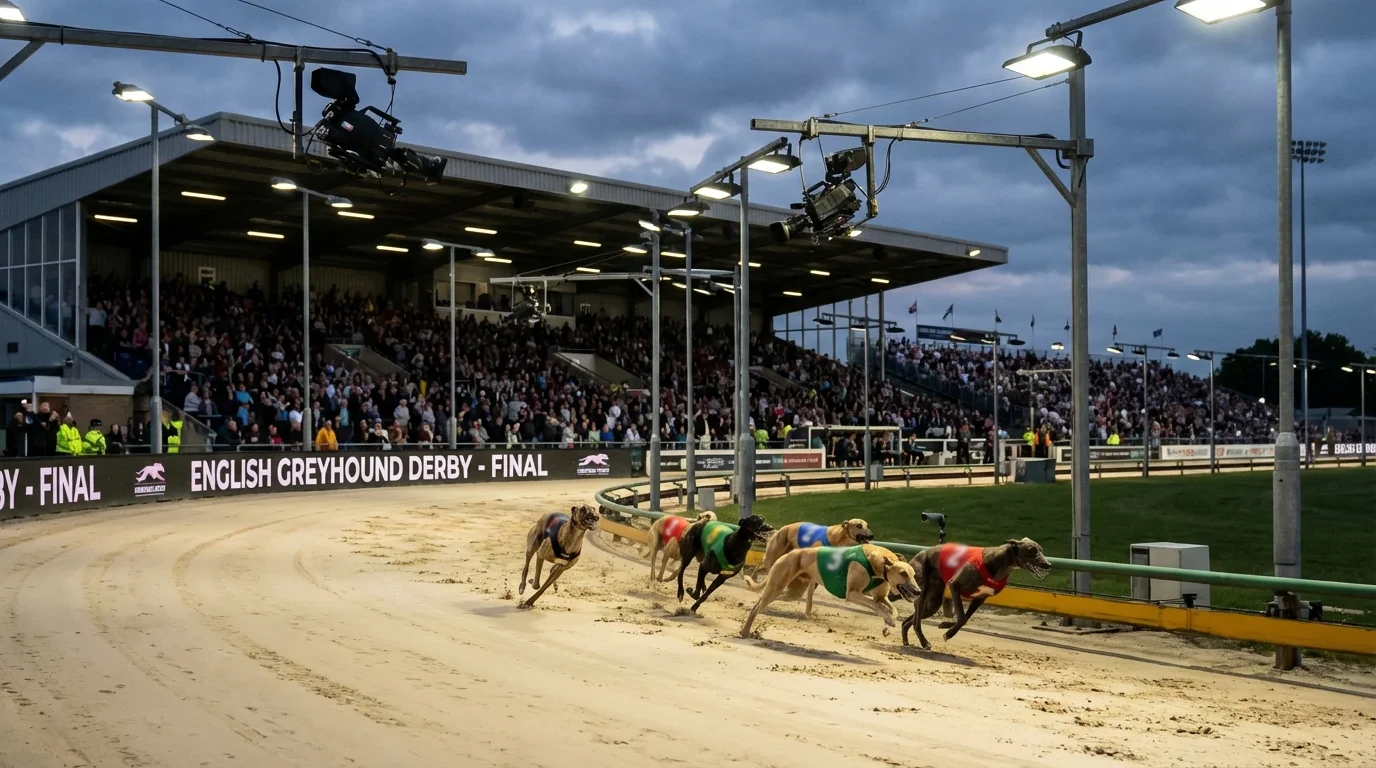
Six weeks, six rounds, one champion. The English Greyhound Derby is the single event that dominates the UK greyhound calendar each year, and it is the one period when the sport attracts attention from bettors who would not normally look twice at a Tuesday evening card. The Derby concentrates the best dogs in the country into a knockout competition at Towcester, and the betting markets around it — ante-post, round-by-round, and on the final itself — offer a different proposition from everyday graded racing. The fields are elite, the form is harder to separate, and the prices move on information that circulates weeks before the first trap opens. Find more race guides at dogracingresultstoday.
For bettors who want to engage with the Derby seriously rather than treating it as a once-a-year flutter, the event requires specific preparation. The format creates its own dynamics, the results from each round carry different weight than regular racing, and the ante-post market has characteristics that reward patience and punish impulse. This guide covers the structure, the betting mechanics, the historical patterns, and the platforms where you can follow and bet on the biggest race in British greyhound sport.
English Greyhound Derby Format: From First Round to Final
The Derby is a multi-round knockout run over 500 metres at Towcester. The competition begins with first-round heats — typically 32 heats of six dogs, drawing from a pool of around 192 entries — and progresses through second-round heats, quarter-finals, and semi-finals to a six-dog final. Each round is separated by approximately one week, giving the competition a six-week span from first heat to final.
Qualification from each round follows a top-two format with fastest losers filling any remaining places. The first two finishers in each heat advance automatically, and a specified number of fastest third-placed dogs also progress. The exact number of fastest losers varies between rounds and can differ between years, but the core principle is stable: you must finish in the top two to be certain of advancing, and anything less leaves you dependent on the times of dogs in other heats.
The knockout format means that each round applies a filter. First-round heats remove the dogs that are not competitive at the highest level. Second-round heats remove the dogs that qualified but cannot sustain their form. By the quarter-finals, the field has been reduced to the top twenty-four, and by the semi-finals to the top twelve. The final six are the dogs that have won or placed across four consecutive rounds — a test of ability, soundness, and adaptability that no other UK greyhound event replicates.
This structure has direct implications for bettors. Unlike a single open race where one good performance can produce a winner, the Derby demands four to five strong performances in succession. Dogs that are brilliant but inconsistent are filtered out. Dogs that are solid but unspectacular survive. The form profile of a typical Derby finalist reflects sustained competence rather than peak brilliance, and pricing the final field requires an assessment of durability as much as speed.
How Derby Results Affect a Dog’s Market Value
Derby performance has a lasting effect on how a dog is priced in subsequent races. A dog that reaches the Derby final enters the racing public’s consciousness in a way that regular graded racing does not achieve. Trainers, graders, and bookmakers all treat Derby form as a premium credential, and the prices available on ex-Derby dogs in their post-competition races often reflect this elevated reputation.
This creates a specific betting dynamic. In the weeks after the Derby, finalists and semi-finalists return to regular racing — open races, Category One events, or graded racing at their home track. The market tends to price these dogs short based on their Derby pedigree, sometimes shorter than their current form warrants. A dog that reached the Derby semi-final but was beaten six lengths in its heat may return to A1 racing at Romford at a shorter price than a dog that has been winning A1 races all summer without Derby exposure. The Derby reputation inflates the price, and the inflation can persist for weeks.
For punters, this means opposing short-priced ex-Derby dogs in their early post-competition runs can offer value. The dogs are often returning from a demanding six-week campaign, may need time to readjust to their home track after multiple runs at Towcester, and are sometimes raced at distances or grades that do not suit their Derby profile. Conversely, backing ex-Derby dogs once the market correction has occurred — typically three or four runs after the competition — can catch them at fairer prices when they have readjusted and the reputation premium has faded.
Ante-Post Betting on the Greyhound Derby: How It Works
The Derby ante-post market opens weeks before the first round and remains active throughout the competition. Ante-post bets are struck at the price available at the time of placement, and the key rule is: if your selection does not run in the competition, or is eliminated in any round, your stake is lost. There is no non-runner, no-bet protection on standard Derby ante-post wagers at most UK bookmakers.
Ante-post prices fluctuate based on trial form, entry confirmations, draw announcements, and results from preceding rounds. A dog priced at 20/1 before the first round may drift to 33/1 if it draws an unfavourable trap in its heat, or shorten to 10/1 after a dominant first-round win. These movements create opportunities for bettors who follow the build-up closely and can identify when the market has overreacted to a piece of news or underreacted to a significant trial performance.
The optimal timing for ante-post Derby bets is typically after the first round but before the quarter-finals. By this point, the field has been halved, the dogs’ Towcester form is established, and the prices have stabilised enough to offer genuine value assessments. Betting before the first round carries maximum risk (withdrawals, poor heats, injuries) but also the longest prices. Betting on the day of the final carries minimal risk but the shortest prices and the least value. The middle rounds represent the best trade-off between information and price for most punters.
Historical Derby Results: Patterns and Predictors
The Derby archive reveals several patterns that recur with enough frequency to inform betting. First-round heat winners who record fast times relative to the round have a statistically higher conversion rate in subsequent rounds than dogs that qualify with moderate times. This is not surprising — the fast heat winners are demonstrating both ability and comfort at Towcester — but the degree of the correlation is stronger than most bettors assume.
Trap draw in the final is historically significant. Inside traps at Towcester carry a mild advantage over 500 metres, particularly traps one and two, where the run to the first bend suits dogs with early pace. The effect is less pronounced than at tighter tracks, but over the decades of Derby finals, inside-drawn dogs have won a disproportionate share. This information is fully public and priced into the market, but the adjustment is not always complete — particularly when a strong dog draws wide and the market shortens it below where the historical data suggests it should be.
Trainer patterns also repeat. A handful of kennels dominate Derby entries and finals, and their dogs tend to arrive better prepared for the specific demands of Towcester’s track. Tracking which trainers have the strongest Derby records — not just winners, but consistent placement across rounds — provides a useful baseline filter when assessing first-round entries.
Where to Watch and Bet on the Greyhound Derby
The Derby is broadcast on Sky Sports Racing throughout the competition, with live coverage of heats, quarter-finals, semi-finals, and the final. Bookmaker live streams — available at Bet365, Coral, William Hill, and others — also carry Derby rounds, typically requiring a funded account or a qualifying bet to access the stream. The final itself receives the widest coverage, with some bookmakers offering free streaming for the showpiece event regardless of account status.
Betting on the Derby is available at all major UK bookmakers, both ante-post and on individual rounds. The Betfair exchange carries Derby markets with good liquidity, particularly from the quarter-final stage onwards, making BSP a viable option for round-by-round betting. BOG is generally available on Derby races at the bookmakers that offer it on standard greyhound racing, and the final typically attracts BOG from operators that do not normally cover greyhounds — it is the one race where the volume justifies the promotional cost. Also read our English greyhound Derby results and guide.
For results and form data, the same hierarchy applies as for regular racing: Timeform for speed and analysis, GBGB for the official record, and Racing Post for individual dog form pages. During the Derby, these services typically add dedicated sections or pages for the competition, making it easier to track the draw, the qualifying routes, and the updated ante-post market in one place. The Derby is the one time of year when UK greyhound racing gets the comprehensive coverage it normally lacks — and bettors who use that coverage effectively have more data to work with than at any other point in the calendar.