
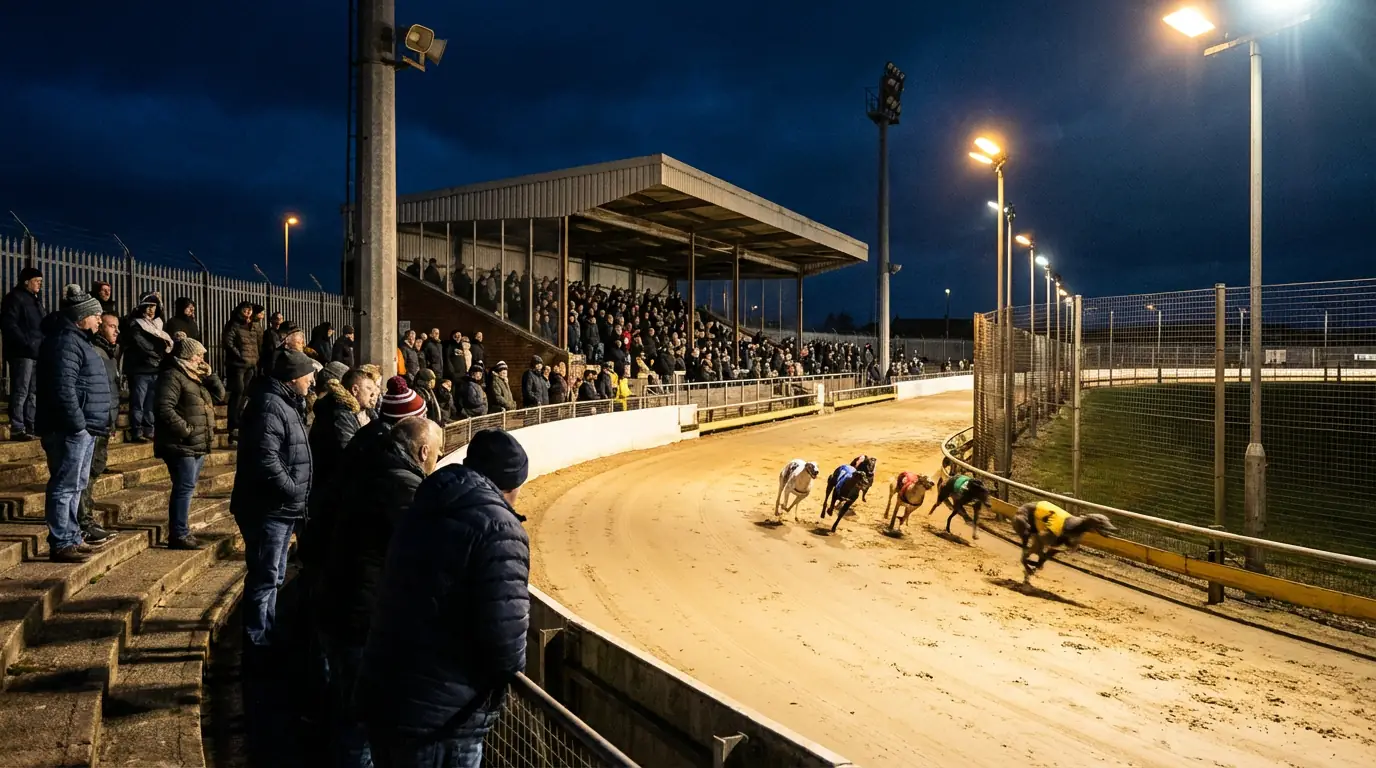
Sunderland Greyhound Stadium is the north of England’s most active GBGB-licensed greyhound venue, and its results page carries a disproportionate amount of informational weight for punters operating in the northern form book. It is not the most glamorous track in the country. The stadium sits at Fulwell, on the north side of the city, and it has never attracted the national press coverage that some southern venues receive as a matter of routine. What it does offer is consistency: regular race nights, a reliable results archive, and a form environment that is competitive enough to produce meaningful data without being so deep in class that it becomes opaque to analysis. Get live results at dogracingresultstoday.
For punters who specifically follow northern form — dogs trained in County Durham, Yorkshire, Lancashire, and the surrounding regions — Sunderland results are not supplementary reading. They are the primary source. Understanding how the track runs, what the statistical patterns in its results reveal, and where to find today’s card and finishing data is the foundation of any informed betting on northern greyhound racing.
Sunderland Greyhound Stadium: Profile and Schedule
Sunderland operates a regular schedule of evening race nights, typically running Wednesdays and Fridays, with additional BAGS meetings on Tuesdays, Thursdays, and Sundays. The number of races per card sits between twelve and sixteen depending on the night, and the track runs almost year-round with limited breaks around major public holidays. That consistency means Sunderland’s results database grows steadily throughout the year — a dog competing at the track in January 2026 may have form records stretching back through the previous season that are directly comparable because the conditions are so consistent.
The track distances at Sunderland include a standard sprint at approximately 261 metres, a mid-distance card distance of 450 metres, and a 640-metre stayers’ trip, with an 828-metre marathon also available. The oval circuit is GBGB-certified and operates under the timing systems that feed into the national results infrastructure. Official results are submitted to the GBGB and become available in the public archive within hours of each card’s completion.
Sunderland’s stadium has its own official results section at sunderland-greyhounds.co.uk/racing, which publishes race information and results data. These cards include the full field, trap draws, finishing positions, and official times — all the raw material a form analyst needs. For older results beyond the previous week, the GBGB archive at gbgb.org.uk/racing/results is the correct reference point.
The graded structure follows the standard GBGB framework. Sunderland’s A-grade racing runs from A1 at the top to typically A8 or A9 at the lower end, with S grades for stayers and occasional open races for higher-quality invitation events. The depth of the grade ladder at Sunderland is worth understanding because it affects how you interpret results: a dog winning at A7 at Sunderland is operating in genuinely low-grade company, and that win, however comfortable, should not be mistaken for a performance that transfers to A4 company with minor adjustments.
Reading Sunderland Race Results Card by Card
The first discipline of reading any Sunderland results card is resisting the temptation to stop at the winner. The finishing order for all six dogs, the official time, the winning margin, and the SP column are each useful; the SP column is particularly revealing because Sunderland markets — like all greyhound markets — occasionally price fields inefficiently, and a winner returned at 8/1 in a race that looked like a three-horse market on paper is a result that demands explanation.
Finishing times at Sunderland over the standard 450-metre trip cluster in a range that reflects the track’s conditioning and the general level of the graded card. Par time for A4-grade racing at 450 metres is approximately 27.50–28.20 seconds depending on conditions. A winning time outside that range — faster than 27.50 or slower than 28.20 — signals either an unusually fast performance or a particularly messy race where interference slowed the field. Neither reading is complete without watching the replay, but the time flags which results are worth scrutinising more carefully.
Sunderland’s results cards include the official margin in lengths between each placed dog. This data point is underused. A dog finishing second by a short head in a fast time ran a genuinely competitive race. A dog finishing second by eight lengths in a slow time was arguably the best of a bad lot rather than a genuine contender. Both appear as second-place finishes in the results column, but their form implications are completely different.
The trap column in Sunderland results is worth tracking over time rather than just reading race by race. Inside traps win more often at Sunderland than outside traps in standard graded events, consistent with the national pattern at most UK oval circuits. But the degree of that bias varies between distances. At the 261-metre sprint, trap bias is extreme and should be treated as a primary selection factor. At 640 metres, the stamina element dominates and trap position matters significantly less — a wide-draw stayer with superior reserves can overtake inside runners through the longer second half of the race.
Sunderland’s Unique Track Characteristics and Their Impact on Results
Sunderland’s oval circuit is slightly tighter than the national median in terms of bend radius, which favours railers. Dogs classified as rail-runners — those that naturally seek the inside line through the bends — benefit from a track geometry that gives them less ground to make up against a wider-running rival of equivalent ability. This creates a pattern in Sunderland results that is useful once recognised: rail-runners here consistently outperform their form expectations when drawing Trap 1 or Trap 2, and underperform when drawn wide because the tight bends expose their directional preference more acutely.
Track condition at Sunderland, like all GBGB venues, is recorded and affects finishing times. Sunderland’s results pages from the stadium website include a going description — typically Firm, Good, or Soft variants — that provides the necessary context for time comparisons. A winning time on soft going at Sunderland is not directly comparable to a winning time on firm going, even in the same grade and at the same distance. Adjusting for going is not optional if you are building a time-based form model; it is a prerequisite for the model being useful at all.
Weather exposure matters more at Sunderland than at many other UK venues because of the stadium’s open layout and its north-east location. Strong winds running head-on into the back straight will slow finishing times measurably and tend to particularly disadvantage wide-running dogs who face more wind resistance than railers tucked close to the inside rail. When you see an unusually slow card time at Sunderland, checking the weather conditions for that evening is the first step in deciding whether the times genuinely reflect below-par performance or simply adverse atmospheric conditions.
The floodlighting at Sunderland is good by regional standards, and night-time racing is the primary programme. Evening conditions introduce their own variables — dew and moisture on the track surface can appear as racing progresses through the card, meaning early races on a given night may produce faster times than late races as the surface picks up residual moisture from cooling air. Tracking this within-card time variation is a granular detail, but it is the kind of granular detail that distinguishes a careful results reader from one simply cataloguing winners.
Where to Bet and Stream Sunderland Greyhound Racing
Sunderland racing is covered by all major UK bookmakers through the BAGS network. Win, each-way, forecast, tricast, and combination markets are available for all standard cards. The market depth at Sunderland is somewhat narrower than at premier London venues — Sunderland cards attract less handle than a busy Romford Friday night — which means odds can be less sharp on mid-range and outsider prices, and shopping across bookmakers for the best available price is correspondingly more valuable.
Live streaming for Sunderland meetings is available through bookmaker platforms carrying SIS content. William Hill, Betfred, and Paddy Power consistently stream Sunderland racing for qualifying account holders. The greyhounds.attheraces.com platform is another access point for broadcast Sunderland content. Before relying on any specific stream for a particular card, verify that the meeting is listed as streamable on your chosen platform — not every Sunderland card is broadcast to every operator simultaneously.
BOG at Sunderland is available on most major bookmaker platforms under the same terms that apply to other UK greyhound meetings. The relative illiquidity of the Sunderland market, however, means that price movement before the off can be sharper than at higher-profile venues — a significant money move on a Sunderland favourite can shorten the price by a point or more in the final minutes before the race. BOG protects against that movement working against you but does not help if the price shortens before you take it. Timing matters at Sunderland.
Betfair Exchange carries Sunderland markets but with lower pre-race liquidity than London venues. BSP settlement is available but the pool is shallower, which occasionally produces BSP returns that diverge more noticeably from bookmaker SP than they would at a higher-volume meeting. For Sunderland specifically, the bookmaker win market with BOG often represents the more predictable settlement option unless you are specifically pursuing exchange trading strategies.
Sunderland Form and What Northern Track Results Reveal
Northern greyhound form exists in a form pool that intersects only partially with the southern and London-based pools. Dogs trained in the north-east and competing exclusively at Sunderland and the handful of other active northern venues — including Newcastle — develop form figures that are internally consistent but require careful calibration when they move to southern venues. The ability level in northern A-grade racing is genuine but not always equivalent to the same grade in London, where the concentration of competitive kennels drives up the standard of even low-grade racing.
The most reliable way to calibrate northern form against national standards is through the open race and invitation event results that occasionally feature dogs from both regions. When a northern-trained dog competes in a national open event and produces a result that can be benchmarked against dogs with southern form, that result provides a conversion rate of sorts — it tells you how a par Sunderland A3 time relates to a par Romford A3 time in terms of actual ability. Building a small database of these cross-regional results over a season gives a northern form analyst a significant edge over punters who simply read results within a single regional silo.
Sunderland also produces a disproportionate number of dogs that improve consistently over multiple consecutive runs at the track. Because the training infrastructure in the north-east is concentrated, and because the regular Sunderland graded structure means dogs run frequently without long interruptions, a kennel in good form at Sunderland can produce a remarkable run of consecutive improvements from the same dog. Tracking those improvement sequences in Sunderland results — a dog whose times have tightened by 0.2 seconds per run over four consecutive starts — is a simple but effective form study that works better at consistent-schedule venues than at tracks where dogs appear less regularly. Also check our live greyhound racing results.
Sunderland results, taken seriously and followed over time, are one of the more honest form books in UK greyhound racing. The track is consistent, the competition is real, and the data infrastructure is reliable. What the results page offers is exactly what it appears to offer: a straightforward record of what happened, delivered to anyone willing to look beyond the winner’s name and the winning SP. Northern form has its own logic. Sunderland is where you learn it.